Hot Water Tank Repair in Burnaby: Fix It or Replace It?
The short version — If water is coming from the tank shell, the tank is finished and no repair changes that. If the tank is dry and the water is cold, an electric tank usually fails at one of two inexpensive parts, the element or the thermostat, and repair is reasonable. Check the breaker and the red reset button first. In Burnaby a replacement is permit work and gets inspected, so price that in.
No hot water this morning? Two minutes of checking tells you whether you are looking at a part or a new tank. If you would rather just have someone sort it out, call us on 778-929-3235 — we answer day and night.
1. Check these three things first
Before anyone sells you anything, rule out the free fixes on an electric tank.
- The breaker. A tripped double-pole breaker in the panel means no heat at all, and it costs nothing to look.
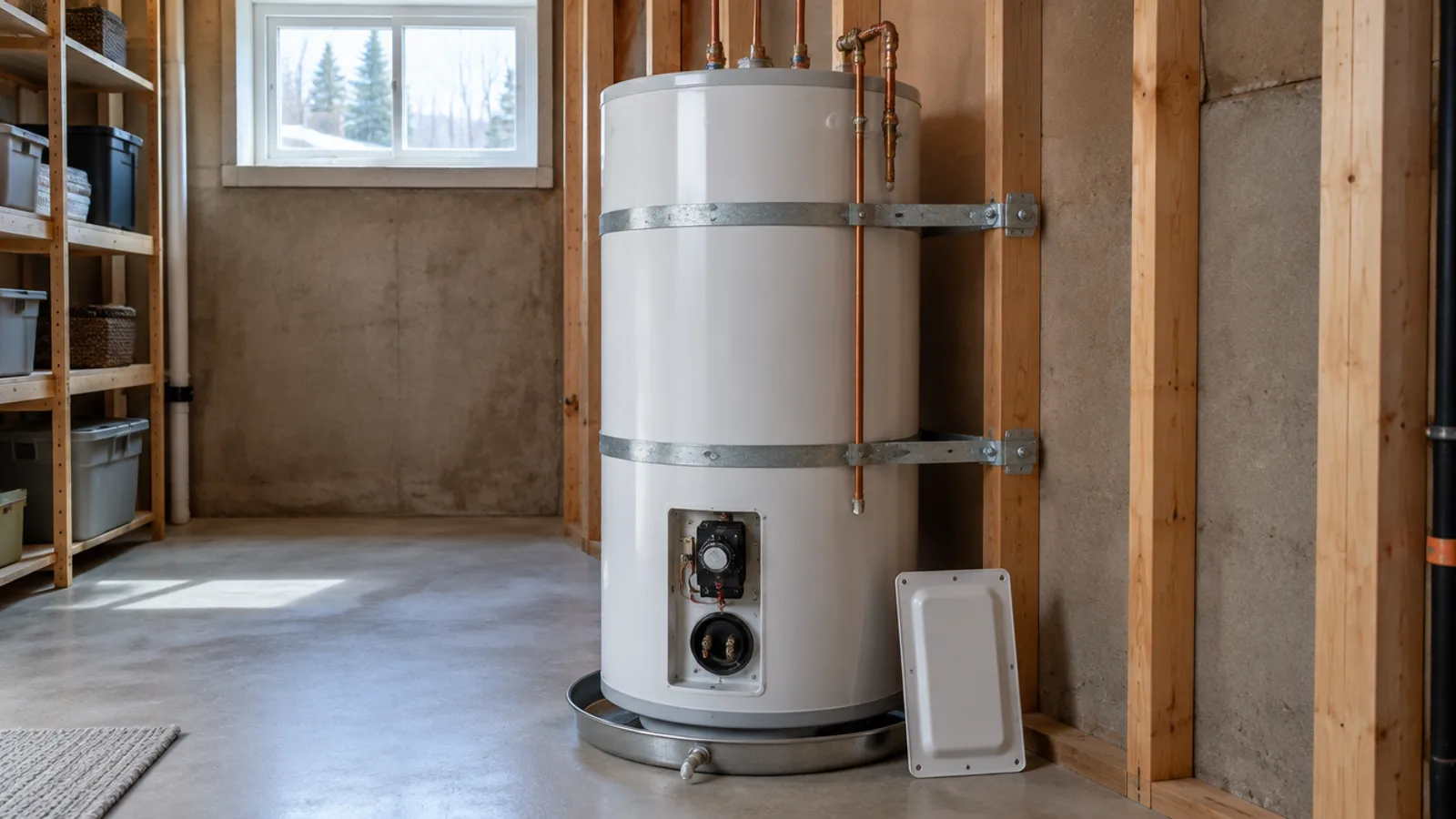
- The reset button. Kill the breaker before you take any panel off — there are live 240-volt terminals behind it. Behind the upper access panel there is a red high-temperature cut-out button. If it has tripped, the tank will sit stone cold. It can be reset once — if it trips again, something underneath it has failed and it needs a plumber, not another press.
- Is the floor dry? Put your hand around the base. Dry floor and cold water is a repair conversation. Wet floor is the next section.
2. Water on the floor usually ends the conversation
If the water is coming from the tank itself, there is no fixing it. A storage tank is a steel cylinder with a glass lining, and once that lining fails and the steel rusts through, no part replaces it.
Not every puddle is the tank, though. Water can come from the cold supply connection, from the relief valve doing its job, or from a drain pan that backed up — all repairs, and inexpensive ones. Find out whether the water is coming from the shell or from something bolted to it before you agree to a new tank. If you cannot tell, that is what leak detection is for, and our guide to the signs of a hidden water leak covers the rest of the house.
3. A cold tank is usually one of two parts
An electric tank that is dry but making no hot water — or lukewarm water that runs out fast — has usually lost a heating element or a thermostat. Both are replaceable. A two-element tank gives the classic tell: hot water for a few minutes, then cold, when the lower element goes.
The part worth understanding is the temperature and pressure relief valve. Natural Resources Canada is plain that it is not optional: "New water heaters must have a temperature and pressure relief valve." It lets water escape if the thermostat fails and the tank overheats, so it is never capped or plugged. One caveat before you let anyone just swap it: a valve that weeps is often reacting to high incoming pressure or thermal expansion rather than failing on its own. If a new valve weeps too, the pressure is the problem.
While you are at the thermostat, HealthLink BC advises that "the hot water temperature of the bathroom taps should be set to 49°C" to limit how badly a scald burns. If the dial was wound up to squeeze more out of a tired tank, wind it back.
4. Why tanks die here, and what that means for repair
Every storage tank has a sacrificial anode inside it — a rod of magnesium or aluminium alloy that corrodes so the steel does not. Natural Resources Canada says the rate it dissolves depends on "the mineral content or hardness of the water as well as the integrity of the enamel or epoxy coating inside the tank", and calls water quality "the single most important factor affecting the life of the water heater."
That works in our favour here. Every hardness figure in Metro Vancouver's 2025 water quality report — source water and treated water alike — sits in the low tens of mg/L as calcium carbonate, topping out around 22. That is very little mineral compared with most of the country.
So judge by symptom first and age second. A dry tank with a dead element is worth fixing. A tank weeping from the shell is not, at any age. And once you are buying parts for the second time, you are paying twice toward a tank you will still end up replacing.
5. In Burnaby, a replacement is permit work
A tank swap here is not a quiet like-for-like job. The City of Burnaby requires a permit for "installing, making changes to or upgrading any part of a plumbing system" in single and duplex dwellings, and the work is inspected. Repairs sit closer to the line than people assume, so ask the City — or ask us — before assuming a part swap is exempt.
The inspection also brings the install up to current requirements instead of matching whatever the last person left. Sentence 9.31.6.2.(3) of the BC Building Code requires a service water heater to be secured to the structure where the Site Class C seismic value is greater than 0.37; the value listed for Burnaby is 0.806, so a compliant tank here is strapped, not just standing. When you compare quotes, ask whether the permit and inspection are in the price — that is the line most often left out. We walk through the process for neighbouring cities in our Port Moody and Richmond guides, and it runs much the same across Burnaby and Metro Vancouver.
6. If the tank is on its last legs, choose your moment
The best argument for replacing a tank that still works comes from Natural Resources Canada, not from a plumber: "consider replacing your water heater close to the end of its life but before it fails, so that you can make an informed choice rather than being forced into an emergency replacement situation."
Choosing the moment is worth something. Water heating is 19.3% of the energy an average Canadian household uses, so what goes in matters for years. It is also the point to ask whether a heat pump water heater suits your home: they use up to 50% less energy than a standard electric tank and carry a $1,000 CleanBC rebate, though only for a primary residence at least 12 months old, on an electric utility account, installed by a licensed contractor, claimed within six months of a paid invoice — and apartments and condos are excluded. Check the current terms on the CleanBC page before counting on it.
The short version
Wet floor under the tank: replace it. Dry tank and cold water: check the breaker and the reset button, then look at the element and thermostat. In Burnaby, put the permit and inspection in the replacement budget. If it has let go and you are mopping right now, our emergency plumbing line is answered 24/7 on 778-929-3235 — and if you are planning instead of panicking, get in touch and we will tell you straight which one you are looking at.
Frequently asked questions
Why is my electric hot water tank not heating?
Check the breaker first, then the red high-temperature reset button behind the upper access panel. If both are fine, the usual causes are a failed heating element or thermostat, and both are replaceable parts. A tank that gives a few minutes of hot water and then runs cold usually has a failed lower element.
Is it worth repairing a hot water tank that is leaking?
Not if the water is coming from the tank shell — the steel has rusted through behind the glass lining and no part fixes that. If it is coming from a fitting, the relief valve or the drain pan, that is a repair and usually an inexpensive one, so identify the source before buying a tank.
Do I need a permit to replace a hot water tank in Burnaby?
A replacement is permit work. The City requires a permit for installing, changing or upgrading any part of a plumbing system in single and duplex dwellings, and the installation is inspected. Whether a smaller repair needs one is worth confirming with the City rather than assuming.
My relief valve is dripping. Does that mean a new tank?
Usually not. A weeping temperature and pressure relief valve is often responding to high incoming water pressure or thermal expansion rather than failing itself. It should never be capped or plugged. If a new valve weeps as well, the pressure is the thing to fix.
Sources & further reading
- Natural Resources Canada — Water Heater Guide (relief valve, anode, water quality, replacing before failure)
- Natural Resources Canada — Guide to residential water heaters (19.3% of household energy; heat pump water heaters up to 50% less energy)
- City of Burnaby — Residential Trade Permits (permit required for work on a plumbing system in single and duplex dwellings)
- CleanBC Better Homes — Home Renovation Rebate Program requirements (heat pump water heater rebate and eligibility)
- HealthLink BC — Burns and scalds in young children (49°C at the bathroom tap)
- Metro Vancouver — Greater Vancouver Water District 2025 Water Quality Annual Report (hardness as CaCO3, source and treated)
- Province of BC — BC Building Code 2024 (Sentence 9.31.6.2.(3), securement of service water heaters; Appendix C seismic values)
Rebate amounts, fees, and code requirements change over time and by municipality. Figures here were verified against the official sources above as of September 17, 2026; always confirm current details with the program or your local authority before making decisions.